Global Order
We are in the midst of a geopolitical transition. States shaping the global order today are less Western, have fewer common interests, and are more normatively diverse. The result is often competition and contestation. This plays out in both established international institutions, emerging strategic spaces such as the Indo-Pacific, and new institutional ventures like the Belt and Road Initiative. Our research seeks to better understand these developments. Our dialogue projects provide a platform for policymakers and young professionals to debate differences, expand their political and cultural knowledge, and explore opportunities for cooperation on transnational challenges. And our podcast discusses different perspectives on foreign policy, security, economics, and other global issues with guests from across the world.

Reaching Across Cultural and Political Divides: Why Dialogues Matter and How They Can Succeed
Global Governance Futures (GGF) – a multilateral dialogue program we ran with the Robert Bosch Stiftung for 10 years – rested on a key principle: to fix global problems, we must work across divides. What have we learned in a decade of GGF?
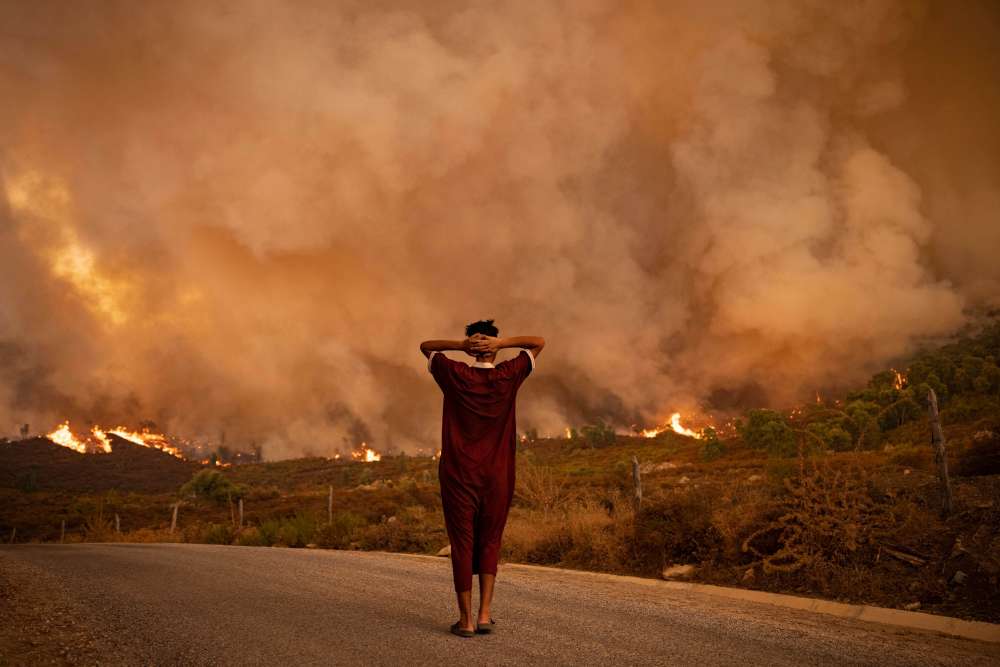
The Future of Conflict in an Age of Climate Extremes
Climate change is causing and exacerbating conflicts worldwide. As weather patterns continue to disrupt, what ripple effects could that have in societies and communities?

Chaos or Connection? The Global Media and Information Landscape in 2035
The internet has revolutionized how we access and share information. And new actors are constantly emerging. What will the global media landscape look like in the next decade? Will media literacy increase? And what about efforts to regulate Big Tech?

A World Divided? Envisioning the Future of Global Inequality
Inequality is a multiplier for a host of other social and political issues. Will global inequality increase or decline by 2035? And what will that mean for fields like health care, migration and tech?
ENSURED: Shaping Multilateralism for a World in Transition
Together with 13 consortium partners, GPPi has launched a new research project to help bolster global governance. Addressing five policy areas – trade, climate, health, migration, and digitalization – that by their very nature pose transnational challenges, ENSURED investigates how the EU can make multilateralism more robust, effective and democratic.
Experts
Thorsten Benner
Garima Mohan
Joel Sandhu
Mirko Hohmann
Oliver Stuenkel
Katrin Kinzelbach
Philipp Rotmann
Johannes Gabriel
Gerrit Kurtz
Funding & Contact
Our research projects are funded by the Mercator Foundation, the German Federal Foreign Office, the EU Commission’s Foreign Policy Instrument, and the EU Delegation to India. Our work on Global Governance Futures – Robert Bosch Foundation Multilateral Dialogues is supported by the Robert Bosch Stiftung. For past dialogue and research projects, we have received funding from the Mercator Foundation, the Open Society Foundation and the European Recovery Program (ERP) of the Federal Ministry for Economic Affairs and Energy.
For more information, please contact Joel Sandhu.
Global Dialogue
In cooperation with the Robert Bosch Stiftung, Global Dialogue is a parliament exchange format that brings together members of the German Bundestag with fellow parliamentarians and other political decision-makers from partner countries in bi- and trilateral formats. The goal of the exchange is to strengthen ties between Germany and key partner countries to build a strategic community of political decision-makers who are able to address global challenges cooperatively.